E-commerce Management System
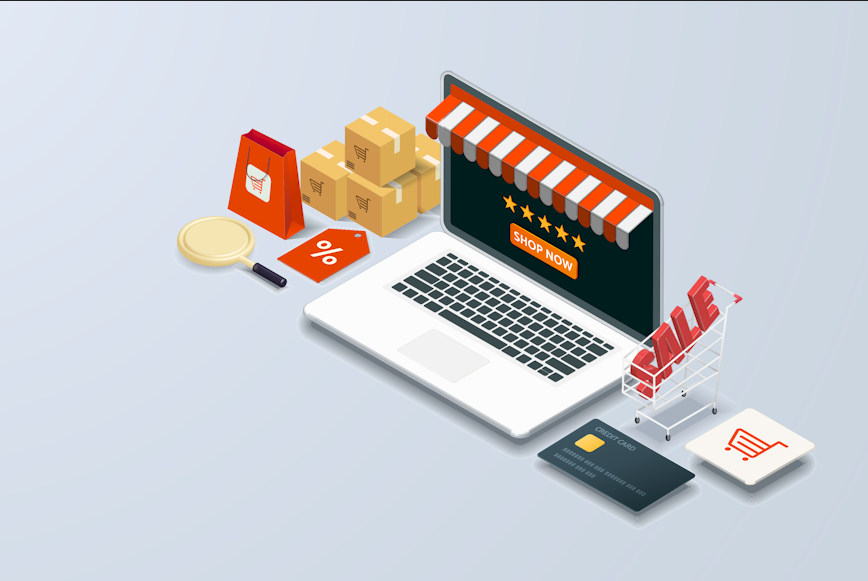
E-commerce Management System
A modern E-Commerce Management System provides businesses with everything they need to sell products and services online, manage orders, control inventory, process payments, and build lasting customer relationships from a single platform.
Whether you operate a small online shop, a growing retail business, or a large multi-channel operation, an integrated e-commerce system helps streamline the entire sales process—from the moment a customer visits your online store to the fulfilment and delivery of their order.
Online Store Management
Create and manage a professional online storefront where customers can browse products, view detailed product information, compare options, and place orders conveniently from any device.
Products can be organised into categories and collections, with support for product variants, pricing, images, descriptions, stock availability, promotions, and other important product information. This gives customers a clear and consistent shopping experience while making catalogue management easier for your team.
Product and Inventory Management
An effective e-commerce platform should be closely connected to inventory management. Every online sale can automatically update stock levels, helping businesses maintain accurate information about product availability.
The system can support multiple warehouses or locations, stock transfers, stock adjustments, purchasing, receiving, and inventory valuation. Businesses can also establish minimum stock levels and replenishment processes to reduce the risk of stockouts.
Shopping Cart and Checkout
A streamlined checkout process makes it easier for customers to complete their purchases. Customers can add products to their shopping cart, review quantities and prices, provide delivery information, select available delivery options, and complete their orders.
The system can calculate taxes, discounts, shipping charges, and order totals automatically, reducing manual work and minimising errors during the sales process.
Online Payments
An integrated e-commerce system can connect with different payment methods, allowing customers to pay using the options available to them. This may include card payments, mobile money, bank transfers, and other supported payment gateways.
Payment information can be linked directly to customer orders, making it easier for the business to track paid, pending, failed, and refunded transactions.
Order Management
From the moment an order is placed, the system provides a central location for managing the entire order lifecycle.
Sales teams can view new orders, confirm payments, prepare items for fulfilment, generate invoices, manage deliveries, and track completed or cancelled orders. This creates a clear workflow between sales, inventory, finance, and logistics teams.
Customer Management
An e-commerce system can maintain a centralised customer database containing customer details, addresses, orders, invoices, payments, and other relevant interactions.
Businesses can use this information to understand purchasing patterns, provide better customer service, manage repeat customers, and develop targeted marketing campaigns.
Discounts and Promotions
Businesses can create promotional campaigns designed to attract customers and increase sales. The system can support discounts based on products, categories, quantities, customer groups, promotional codes, or specific periods.
This makes it possible to implement strategies such as seasonal promotions, clearance sales, bulk discounts, first-time customer offers, and other marketing initiatives.
Delivery and Fulfilment
Once an order has been placed, the system can connect sales with warehouse and delivery operations. Orders can be prepared, packed, dispatched, and tracked through defined fulfilment workflows.
For businesses that operate their own delivery services, delivery operations can also be integrated with customer and order information, providing greater visibility from purchase to delivery.
Invoicing and Accounting
An integrated e-commerce system can connect online sales directly with financial operations. Customer invoices can be generated from confirmed orders, while payments and refunds can be recorded against the appropriate transactions.
When connected to an accounting system, sales, taxes, receivables, payment transactions, inventory valuation, and other financial information can flow into the appropriate accounting records, reducing duplicate data entry.
Multi-Channel Sales
Businesses increasingly sell through multiple channels, including their own websites, physical stores, marketplaces, social media platforms, and other digital channels.
A centralised e-commerce management system can help bring these operations together, providing a unified view of products, inventory, customers, orders, and sales across different channels.
Reporting and Analytics
Management needs more than just a list of orders. An e-commerce system can provide reports and dashboards covering sales performance, revenue, products, inventory, customers, payment methods, and order fulfilment.
Businesses can use this information to identify their best-selling products, monitor sales trends, evaluate promotions, understand customer behaviour, and make better operational decisions.
Why Businesses Need an Integrated E-Commerce System
Running an online store involves much more than displaying products on a website. Behind every successful transaction are inventory, purchasing, accounting, payments, fulfilment, customer management, and reporting processes.
An integrated e-commerce management system brings these processes together. Instead of maintaining separate systems for the online store, inventory, sales, and accounting, businesses can operate from a connected platform where information flows between departments automatically.
The result is greater operational visibility, fewer manual processes, better inventory control, and a more consistent customer experience.
A Complete Platform for Digital Commerce
An E-Commerce Management System provides the foundation for businesses that want to sell efficiently in an increasingly digital marketplace. By connecting online sales with inventory, finance, customers, fulfilment, and business reporting, it enables organisations to manage their entire commerce operation from one central platform.
Whether you are launching an online store or expanding an established retail operation into digital commerce, an integrated e-commerce solution can provide the tools required to manage growth while keeping everyday operations organised and under control.
Ready to transform your business?
Let’s talk about your goals, challenges, and opportunities—and explore how the right ERP solution can help you work smarter, operate more efficiently, and grow with confidence.
Call Us or you can Book A Call